TL;DR: For a sewage backup in Abilene, TX, call Air Care Restoration at (325) 339-8723. Sewage is Category 3 black water under IICRC standards, which means it is a health hazard that needs contaminated materials removed and the area sanitized, not just mopped up. A plumber clears the clogged or broken line; a restoration company handles the contamination, drying, and insurance documentation. Most homeowners need both.
If sewage is coming up through a floor drain, backing into a tub, or pooling around the toilet base, you are dealing with more than a plumbing clog. That water has been through a sewer line and carries bacteria, viruses, and waste. Older homes in central Abilene with clay or cast-iron sewer laterals are especially prone to this kind of backup after a root intrusion or a line collapse, and the first decision you make, who you call and in what order, affects both your health and your insurance claim.
Who should I call first for a sewage backup in Abilene?
Call Air Care Restoration at (325) 339-8723 as your first call once the water source is identified, because sewage contamination needs to be contained and documented before cleanup starts. The company runs 24/7 and is an IICRC Certified Firm, which matters here because Category 3 water cleanup has to follow the IICRC S500 standard for containment, removal of affected porous materials, and antimicrobial treatment.
If you can still hear water actively running into the house, or the source is unclear, a quick call to a licensed plumber to stop the flow should happen first or at the same time. Either way, do not wait to see if it dries up on its own. Standing sewage degrades flooring, drywall, and subflooring fast, and the longer it sits, the more material has to be removed instead of saved.
Should you call a plumber or a restoration company?
A plumber’s job is to stop the water; a restoration company’s job is to clean up what it left behind. Those are two different trades with two different scopes, and most sewage backups need both.
A plumber diagnoses and clears the blockage, whether that’s a root-clogged lateral, a collapsed clay pipe, or a city main backup. They run a camera, snake or hydro-jet the line, and confirm the drain is flowing again. What a plumber typically does not do is remove contaminated carpet pad, cut out wet drywall, run air movers and dehumidifiers, or apply an EPA-registered antimicrobial to the affected structure.
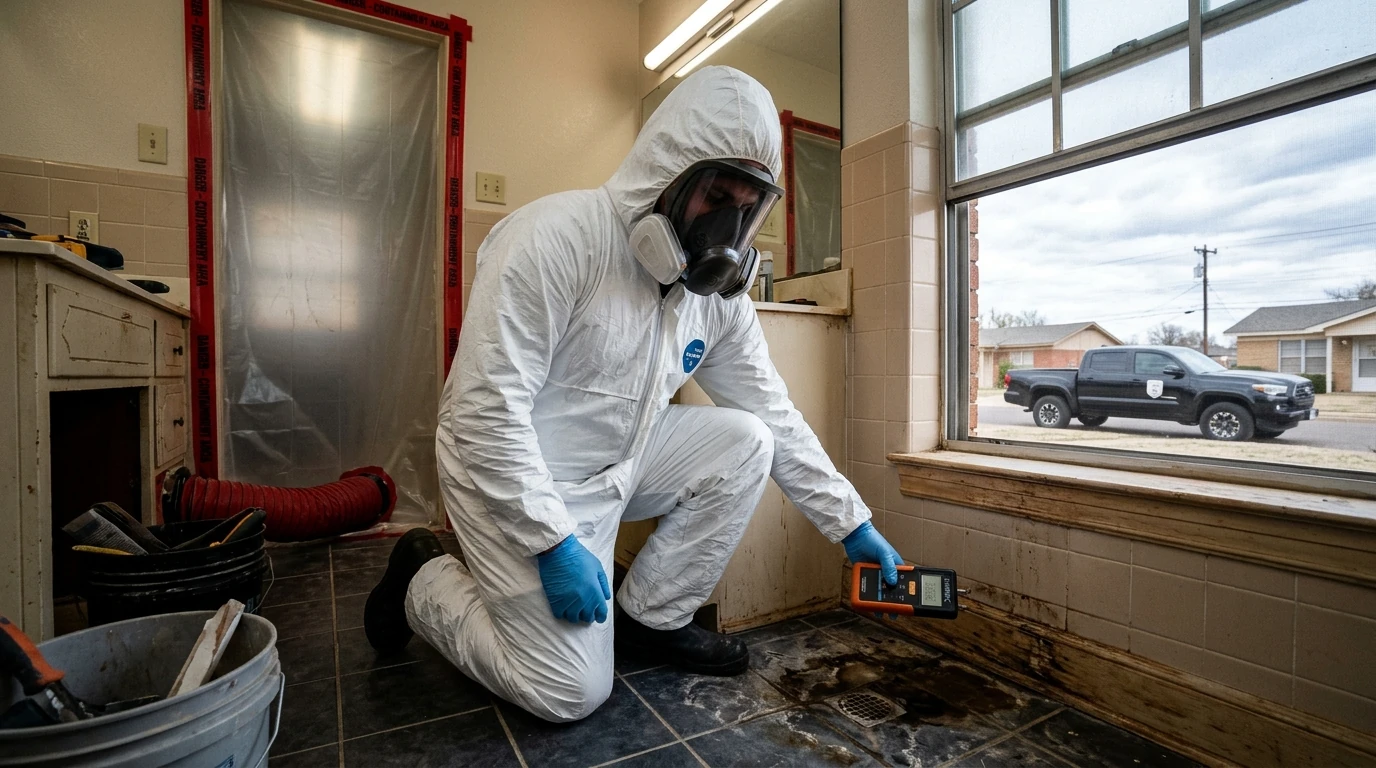
That second part is restoration work. A restoration crew documents the damage for your insurance adjuster, removes materials that cannot be sanitized (most carpet, pad, and often the bottom few inches of drywall touched by black water), and dries the structure to IICRC S500 benchmarks. Skipping this step because the line is clear again is one of the most common mistakes homeowners make, since the health hazard isn’t the clog, it’s what came through it.
Is it safe to stay in the house after a sewage backup?
It depends on how much area is affected and whether the contaminated material has been contained, but as a general rule, keep kids, pets, and anyone with respiratory issues away from the affected rooms until cleanup starts. Category 3 water carries bacteria and pathogens that spread through contact and through airborne particles once materials dry out.
Close the door to the affected room if you can, avoid walking contaminated water through the rest of the house on your shoes, and skip the mop-and-bleach approach. Bleach does not reach what’s absorbed into carpet pad, baseboards, or subflooring, and mixing cleaning chemicals in a confined space creates its own hazard. For more on why this category of water gets treated differently than a clean supply-line leak, see our breakdown of Category 3 water damage.
Will homeowners insurance cover sewage backup cleanup?
Most standard homeowners policies do not automatically cover sewage or drain backup, it typically requires a separate water backup (sewer/sump) endorsement added to the policy. Check your declarations page for this endorsement before assuming you’re covered, and contact your insurer as soon as mitigation starts.
If you do have the endorsement, documentation matters. Photos before cleanup begins, a written scope of the affected materials, and drying logs all support the claim. The Texas Department of Insurance has a consumer guide to homeowners coverage that’s worth a read if you’re unsure what your policy includes. A restoration company that handles this kind of loss regularly can put together the documentation an adjuster expects to see.
What happens when you call for help?
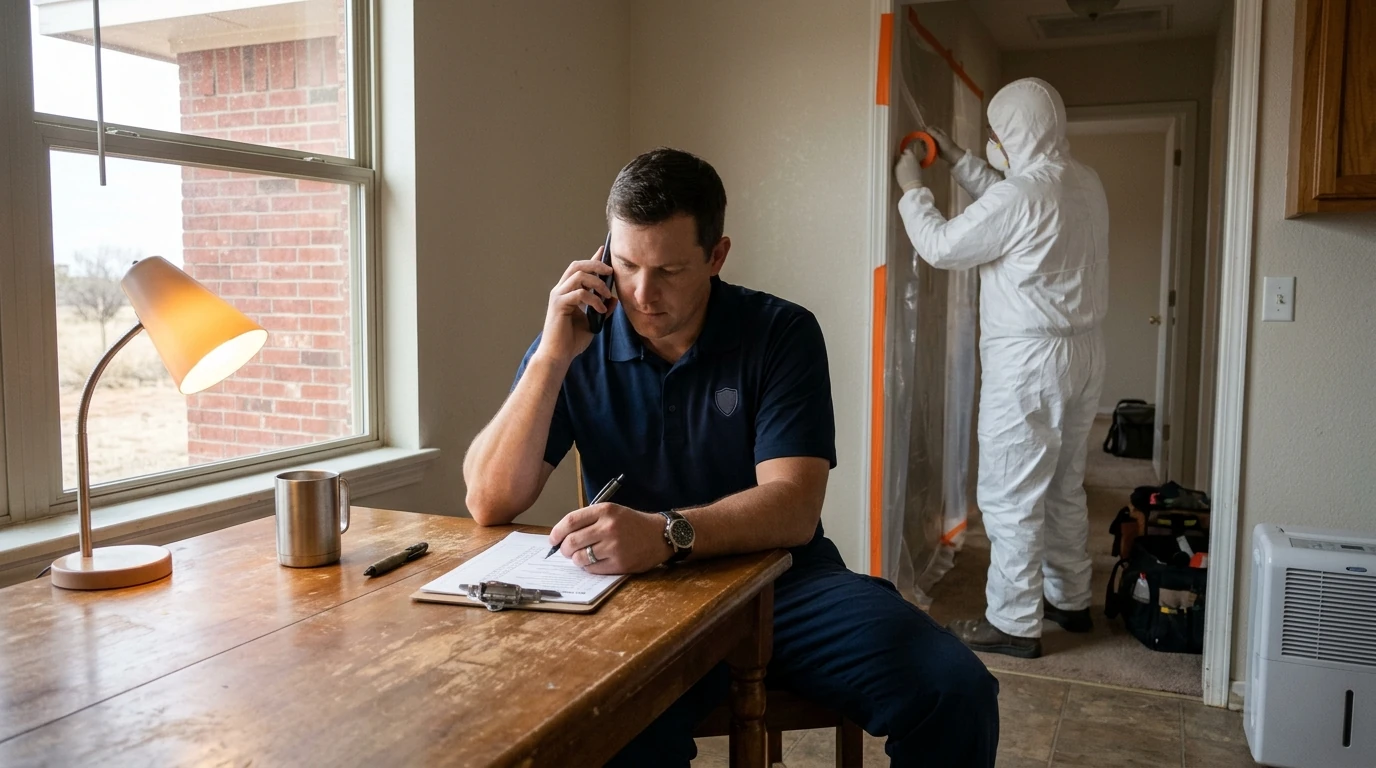
The first call is a short triage conversation: where the water is, how long it’s been sitting, and whether anyone is in contact with it. Have your policy information nearby if you have it, along with photos if it’s safe to take them.
On arrival, a tech identifies the water category and the extent of the spread, sets up containment to keep contamination from tracking further into the home, and begins extraction. From there it’s removal of unsalvageable materials, antimicrobial treatment, and structural drying with air movers and dehumidifiers monitored over several days. You can see what that process looked like for one real Abilene customer in our sewage cleanup case study, and the full scope of the service is outlined on our sewage cleanup page.
If you’re standing in a bathroom right now watching water come up through a drain, the order of operations is simple: stop what you can safely stop, keep people and pets out of the room, and get a professional eye on it before you start cleaning. Request an assessment if you need someone to walk you through it.
Need help now? Call Air Care Restoration at (325) 339-8723.