TL;DR: A burst pipe in Abilene usually produces two separate bills: a plumber’s repair, often $150 to $500 for a straightforward fix, and a water damage cleanup bill that can run from roughly $1,200 for a small under-sink leak to $9,000 or more for a frozen attic line that soaked insulation and drywall. The total depends on where the pipe broke, how long water ran before the shutoff, and whether porous materials like drywall and insulation have to be torn out.
If a pipe split in your attic or an exterior wall during a hard freeze and water is still dripping through the ceiling, you are probably trying to answer two questions at once: who stops the leak, and what is this actually going to cost. Those are two different jobs with two different invoices, and knowing the difference now will save you confusion when the bills arrive.
How much does burst pipe cleanup cost in Abilene, TX?
Most Abilene homeowners pay somewhere between $1,200 and $9,000 for burst pipe cleanup, not counting the plumbing repair itself. Where you land in that range depends almost entirely on how far the water traveled and what it soaked.
| Scenario | Typical Cost Range |
|---|---|
| Plumber-only repair (exposed supply line, quick valve swap) | $150 - $500 |
| Under-sink or single-room Cat 1 water cleanup, same-day shutoff | $1,200 - $3,000 |
| Ceiling or wall-cavity burst with drywall tear-out | $3,000 - $7,000 |
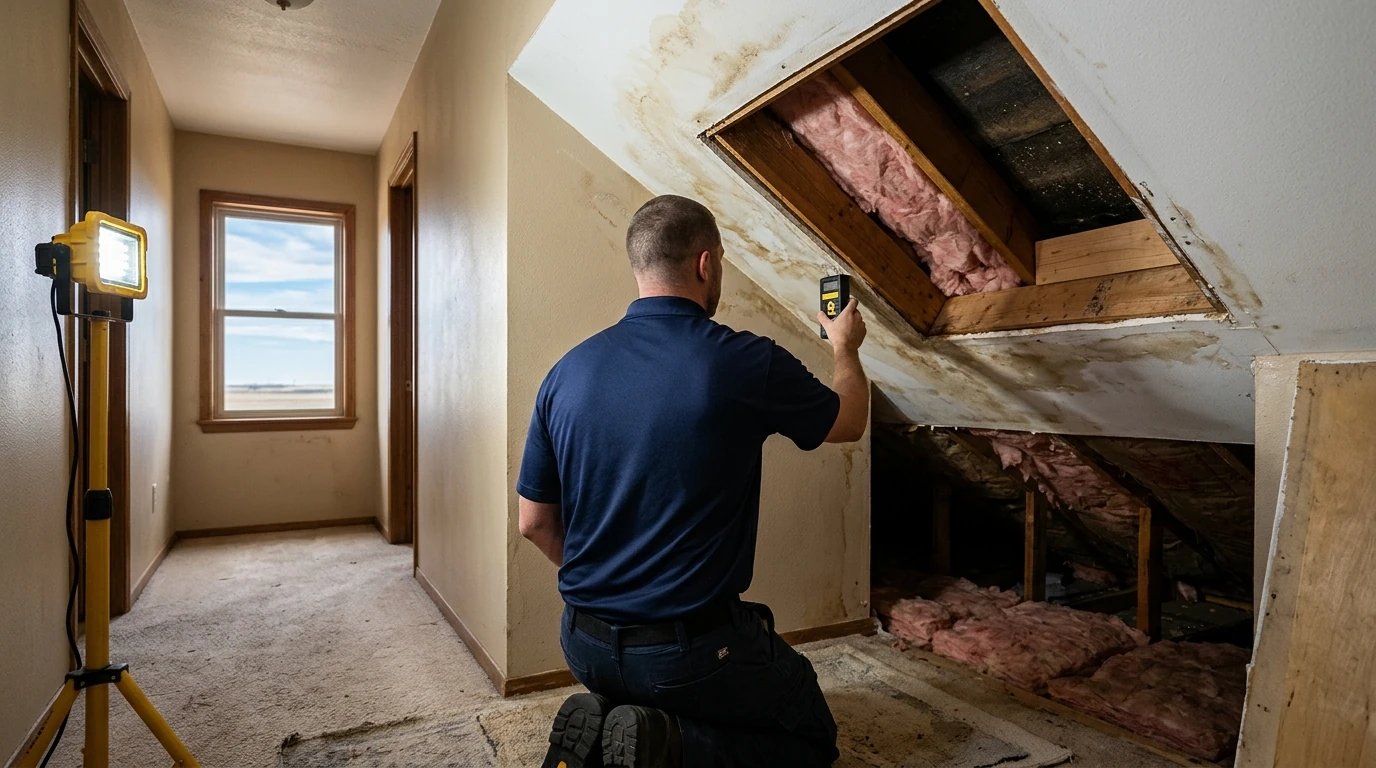
| Frozen attic line burst (insulation, drywall, sometimes ductwork) | $4,000 - $9,000 |
| Multi-room flood from a burst main stack, Class 3-4 drying | $8,000 - $15,000+ |
These are typical industry ranges for this type of loss, not a quote for any specific job. A written scope after an in-person assessment is the only way to get an exact number, since the price swings on how much material the water touched and how long it sat before anyone caught it. For a broader look at water damage pricing across the state, see our statewide cost guide.
What’s the difference between the plumber’s bill and the restoration bill?
The plumber’s bill pays for stopping the leak; the restoration bill pays for drying out and repairing everything the leak touched, and homeowners are often surprised these come from two different companies.
A plumber cuts out the burst section of pipe, solders or presses in a new fitting, and pressure-tests the line. That part of the job is usually quick, often a few hundred dollars if the pipe is accessible, more if they have to cut into a wall or ceiling to reach it.
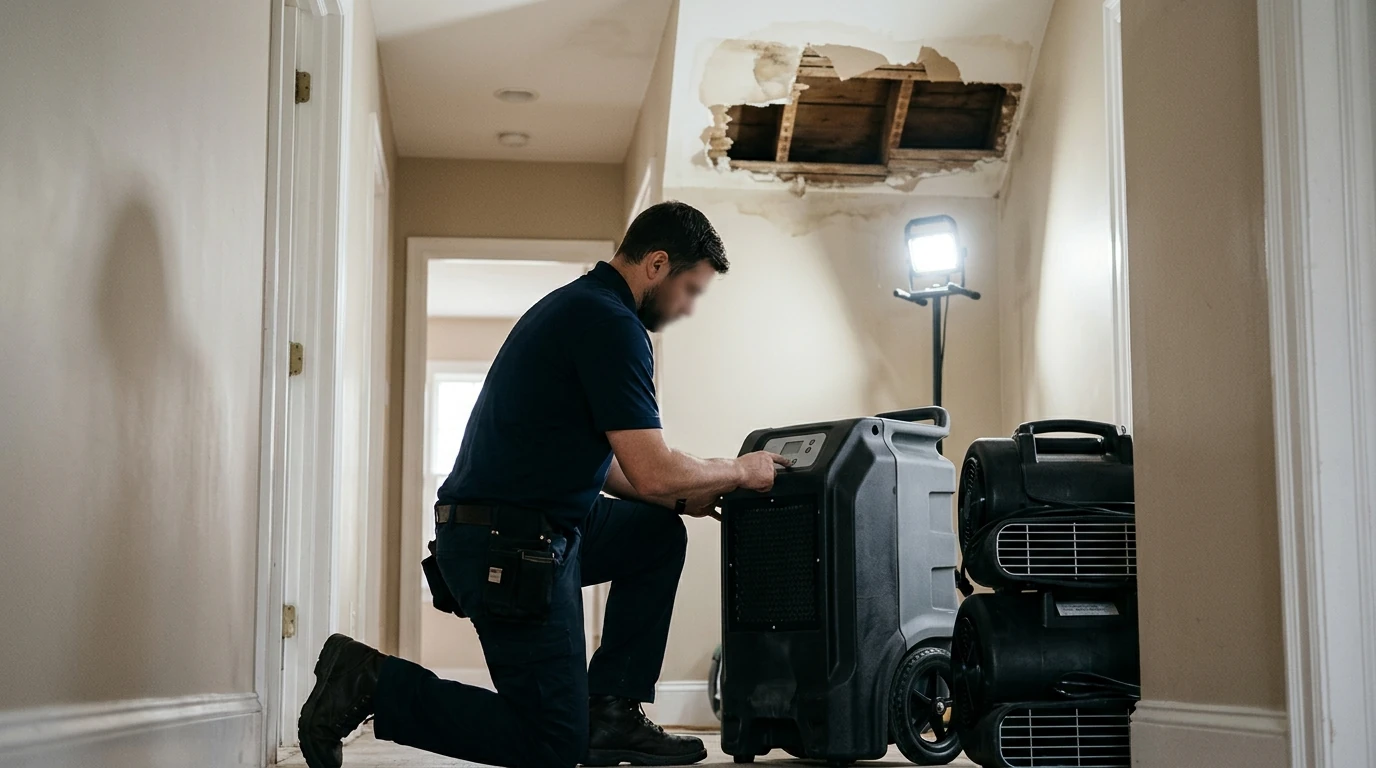
The restoration bill covers everything after the water stops flowing: extracting standing water, setting air movers and dehumidifiers, monitoring moisture in the walls and subfloor over several days, and removing and replacing any drywall, insulation, flooring, or cabinetry that cannot be dried in place. Equipment typically runs for 3 to 5 days on a standard residential drying job, and each day of equipment rental and monitoring adds to the total. The burst pipe in Abilene who-to-call guide walks through which call to make first.
Why does a frozen attic or exterior-wall break cost more than an under-sink leak?
An attic or exterior-wall burst costs more because gravity and insulation work against you: water drops through ceilings, runs inside wall cavities, and soaks insulation long before anyone notices a stain.
Many older Abilene homes run water lines through attics or exterior walls that were never designed for West Texas cold snaps, a weak point that showed up across the region during the February 2021 freeze. When one of those lines splits, the water often travels along joists and framing before it shows up as a ceiling stain, which means the visible damage understates the real soaked area. By the time a wet spot appears on a ceiling, insulation above it, the drywall itself, and sometimes a section of the attic decking have already been sitting wet.
Compare that to a supply line under a bathroom sink: the leak is contained to a cabinet, the water pools on a hard floor instead of soaking into framing, and cleanup is often a one-day extraction and dry-out. That is why the same word, “burst pipe,” can mean a $1,500 job or a $9,000 job depending entirely on where the break happened.
What drives the final number up or down?
Four things move the price more than anything else: how fast the water was shut off, what category the water is, what materials it touched, and whether repairs trigger a code upgrade.
Water sitting for 24 to 48 hours starts supporting mold growth on wet drywall and framing, according to the EPA, so a slow discovery almost always means more tear-out. A pipe burst is typically Category 1, clean water, at the moment it fails, but that water degrades the longer it sits in contact with drywall, insulation, and framing, which is why same-day response keeps the job in the cheaper range on the cost table above. Drying follows the IICRC S500 standard, and the structural class of the loss, how much water and how hard the materials are to dry, determines how many days of equipment run and how much monitoring the job needs. Finally, if the repair touches an attic or wall that needs to meet current code (added insulation, updated electrical near the repair), that adds to the restoration or reconstruction line, not the cleanup line.
Does homeowners insurance cover a frozen pipe burst in Texas?
Most Texas homeowners policies cover sudden, accidental water damage from a burst pipe, since that is treated as a covered peril rather than gradual wear. What they typically do not cover is damage from a slow, long-term leak the homeowner could reasonably have caught sooner.
The Texas Department of Insurance notes that coverage details vary by policy and insurer, so the exact language in your declarations page matters more than general rules of thumb. You have a duty to mitigate further damage once the leak is found, which means shutting off the water and starting drying promptly protects your claim rather than just your home. Photograph the damage before cleanup starts, keep receipts for emergency mitigation, and get a written scope of work from whoever does the drying, since adjusters lean on that documentation to process the claim.
What should you do first to keep the cost down?
Shut off the water at the main or the nearest isolation valve, then get extraction and drying started as close to immediately as possible, since every hour of delay pushes the job toward the more expensive end of the cost table.
After the valve is off, open cabinets and move furniture away from the wet area if it’s safe to do so, and take photos before anything is moved for your insurance file. From there, a licensed Abilene restoration company can run moisture readings to map how far the water actually traveled, which is usually farther than it looks from the visible stain. Call Air Care Restoration at (325) 339-8723 to schedule a moisture assessment if water is still active in your attic, wall, or ceiling.
A burst pipe is rarely just one bill. Knowing which costs belong to the plumber and which belong to the drying and repair work makes it easier to read your invoices, document the right things for your insurer, and avoid paying twice for the same scope.
About Air Care Restoration
The company is an IICRC Certified Firm holding Texas Mold Remediation Contractor License MRC2262 through the Texas Department of Licensing and Regulation, serving Abilene and the surrounding Big Country region since 2026. Its crews handle water damage restoration, emergency water removal, mold remediation, fire and smoke damage restoration, and reconstruction work, operating on a 24/7 basis across Abilene, Sweetwater, Clyde, Merkel, and nearby communities. This guide was prepared with input from the company’s restoration team, led by Sarha Boyd.